Understanding the Supply Chain Process: Hack New Insights
Understanding the Supply Chain Process: Hack New Insights
Understanding the Supply Chain Process: Hack New Insights
SHARE THIS ARTICLE
RECENT ARTICLES
Unleash the potential of your business with Ex-works
Ex-works has assisted companies globally in imports and exports. Allow us to handle all your shipments so you do not face any challenges during the customs clearance process in the Philippines. We also offer customs clearance services at a small cost if you need to deliver urgently and save time. Open an account today with Ex-works, and let us assist your business in overcoming the obstacles of international customs.
SHIP IN MORE THAN 180 COUNTRIES
-
Wholesale Rate
-
Global Network
-
Online Tracking
-
Simplified Shipping
GROW YOUR BUSINESS FROM ANYWHERE.
SUBSCRIBE TO EX-WORKS24/7 NEWS LETTER
The supply chain process plays a vital role in the economy by facilitating the smooth flow of goods and services from producers to consumers. When the supply chain operates efficiently, it helps drive economic growth by lowering costs, increasing product availability, and generating employment across various sectors. However, disruptions in the supply chain can lead to shortages, rising prices, and economic instability. Ultimately, a reliable and well-managed supply chain is essential for supporting global trade and the success of businesses worldwide.
In today’s global economy, products are produced and delivered from all corners of the world. Whether you’re purchasing a smartphone, a bag of coffee, or a car, these items typically go through several stages before they arrive at your doorstep. This entire process is referred to as the supply chain.
So, what does the supply chain process involve? Let’s take a closer look and break it down in simple terms to help you understand how it all works.
What is the Supply Chain Process?
The supply chain is the series of steps that take a product from its raw material phase to the customer. It includes everything from sourcing and manufacturing to transportation, storage, and final delivery.
Imagine it like a relay race, where each participant (or company) handles a specific part of the process, passing the product along until it reaches its endpoint.
1. Sourcing Raw Materials
The supply chain begins with sourcing raw materials, which is the foundation of the entire process. These materials can include metals, fabrics, plastics, or food ingredients, and are either extracted from nature or produced in factories. Take the example of a smartphone: to create one, manufacturers need materials like glass, plastic, and metals such as aluminum and copper. These resources are either mined, harvested, or produced by suppliers.
2. Manufacturing
After the raw materials are collected, the next stage is manufacturing, where these materials are transformed into a finished product. Factories and production plants take the raw components and combine them to create something functional.
For example, in the case of a smartphone, this stage involves assembling the screen, battery, circuit boards, camera, and other components into a fully operational device. In some cases, different parts are produced in separate factories and then shipped to another location for final assembly.
3. Warehousing and Storage
Once the product is manufactured, it is stored in a warehouse before being shipped out. This process is known as warehousing. Warehouses are large facilities where products are kept until they’re ready to be delivered to retailers or directly to customers. Some companies choose to store their products in warehouses close to their factories, while others may move them to distribution centers nearer to customers to help speed up delivery times.
4. Transportation
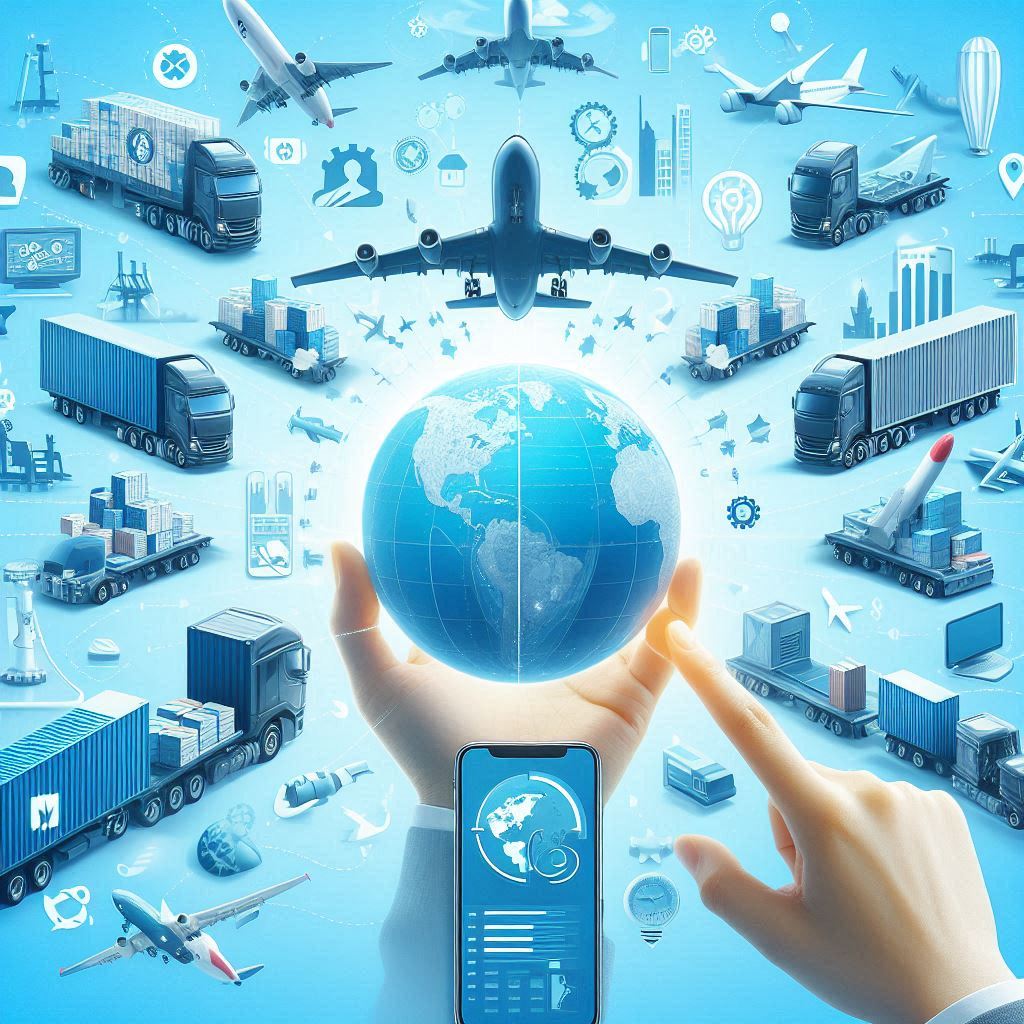
Next is the transportation phase, where goods are moved from the warehouse or factory to retail stores, distribution centers, or directly to customers. The method of transportation varies depending on the destination:
– Trucks are typically used for local or regional deliveries.
– Ships are preferred for international shipments, especially when handling large quantities.
– Airplanes are used for quicker deliveries, often for smaller or high-value items.
– Trains are an option for transporting bulk goods over land.
The time it takes for this step can range from a few days to several weeks or even months, depending on the distance and the transportation method used.
5. Distribution
During the distribution stage, products are sent to local retailers, stores, or directly to customers’ homes. Major companies or third-party delivery services can manage this process. For instance, when you place an online order, the product often moves through multiple distribution centers before it reaches your doorstep.
6. Retail and Customer Delivery
The final step in the supply chain is when products arrive at the retailer, whether that’s a physical store or an online marketplace, or when they are delivered directly to the customer. At this point, customers can purchase the product and use it. This marks the completion of the supply chain process. For example, when you visit a store, the smartphone is displayed on a shelf, ready for you to buy. Alternatively, if you order online, the product is shipped directly to your home.
Retail and Customer Delivery
The supply chain plays a crucial role in making sure products are available when and where they’re needed. Without an efficient supply chain, getting everyday items like food, clothing, electronics, or even medical supplies would be much more challenging—if not impossible. When the supply chain runs smoothly, businesses can keep costs low, minimize delays, and enhance customer satisfaction.
Challenges in the Supply Chain Process
While the supply chain process sounds simple, it’s not always easy. There are many challenges that companies face along the way:
- Delays in transportation: Weather, traffic, or strikes can delay shipments.
- Stock shortages: Sometimes materials or products are in short supply.
- Rising costs: Gas prices, labor costs, or tariffs can increase expenses.
- Global disruptions: Natural disasters, pandemics, or political issues can disrupt the flow of goods.
Despite these challenges, companies work hard to overcome obstacles and keep the supply chain running smoothly.
In conclusion, the supply chain process is like a complex puzzle, with each piece playing a key role in getting products to you. From sourcing raw materials to manufacturing, warehousing, transportation, and delivery, every step is essential. Understanding how the supply chain works helps you appreciate the effort behind the everyday products you purchase. As global events continue to impact how goods are moved across the world, it’s increasingly important to stay informed about how products travel from one place to another.
Frequently
Asked Questions
It integrates product planning, raw material sourcing, manufacturing, inventory control, and final delivery. This end-to-end framework coordinates suppliers, logistics providers, and distributors to transform raw inputs into finished goods while optimizing cost, speed, and customer satisfaction across the global trade ecosystem.
Accurate demand forecasting analyzes market trends and historical data to align production schedules with consumer needs. This minimizes costly safety stock overstocking, prevents stockouts, reduces storage expenses, and ensures capital is utilized efficiently across procurement and manufacturing operations.
Inventory management is crucial for balancing supply and demand. It ensures that businesses have the right amount of stock on hand without overstocking or running out of goods. Effective inventory management helps minimize costs related to storage and stockouts, and it plays a key role in improving the overall efficiency of the supply chain. By forecasting demand, businesses can optimize stock levels and maintain a smooth flow of products through the supply chain.
Logistical management moves physical freight seamlessly across ocean, air, and land transportation networks. By managing customs compliance, freight forwarding, and last-mile delivery, efficient logistics ensures compliance with international trade regulations while reducing total transit times and landed costs.
Effective inventory control balances product supply against market demand using strategies like Just-In-Time (JIT) stocking. Eliminating excess holding inventory frees up working capital, decreases warehouse storage overhead, and reduces product obsolescence across distribution nodes.