How to Recover Abandoned Cargo in the Philippines
How to Recover Abandoned Cargo in the Philippines
How to Recover Abandoned Cargo in the Philippines

SHARE THIS ARTICLE
RECENT ARTICLES
Unleash the potential of your business with Ex-works
Ex-works has assisted companies globally in imports and exports. Allow us to handle all your shipments so you do not face any challenges during the customs clearance process in the Philippines. We also offer customs clearance services at a small cost if you need to deliver urgently and save time. Open an account today with Ex-works, and let us assist your business in overcoming the obstacles of international customs.
SHIP IN MORE THAN 180 COUNTRIES
-
Wholesale Rate
-
Global Network
-
Online Tracking
-
Simplified Shipping
GROW YOUR BUSINESS FROM ANYWHERE.
SUBSCRIBE TO EX-WORKS24/7 NEWS LETTER
Home » How to Recover Abandoned Cargo in the Philippines
How to Recover Abandoned Cargo in the Philippines
How to Recover Abandoned Cargo in the Philippines starts with knowing why customs held the shipment and whether recovery remains possible. Importers face rising storage costs, missed sales, and the risk of losing valuable goods. However, Philippine customs laws provide remedies for certain abandoned shipments. Acting early can protect business interests and prevent further delays. This guide explains how to Recover Abandoned Cargo through lawful customs procedures.
So, how to Recover Abandoned Cargo in the Philippines. Every delayed shipment has a different history. Some importers miss filing deadlines, while others face permit issues or unpaid duties. Therefore, owners must check the shipment’s legal status before requesting release. The Bureau of Customs determines which remedies apply under existing rules. Understanding these steps helps importers make informed decisions and avoid unnecessary expenses.
Table of Contents
How to Recover Abandoned Cargo in the Philippines
Understanding Abandoned Cargo in the Philippines
Under the Customs Modernization and Tariff Act, goods may become abandoned through express declaration or circumstances defined by law. Section 1129 addresses express abandonment, while Section 1130 covers implied abandonment. For example, failure to lodge a goods declaration within the legal period may trigger abandonment procedures. Other grounds include failure to pay assessed duties and taxes within applicable deadlines.
Importers should first determine whether the Bureau of Customs has issued an abandonment notice or order. Next, they should confirm the shipment’s arrival date, declaration status, and customs assessment. These details help establish whether the owner can still take lawful action. Abandoned cargo recovery requires careful review because each shipment may face different procedural limits.
Steps for Abandoned Cargo Recovery
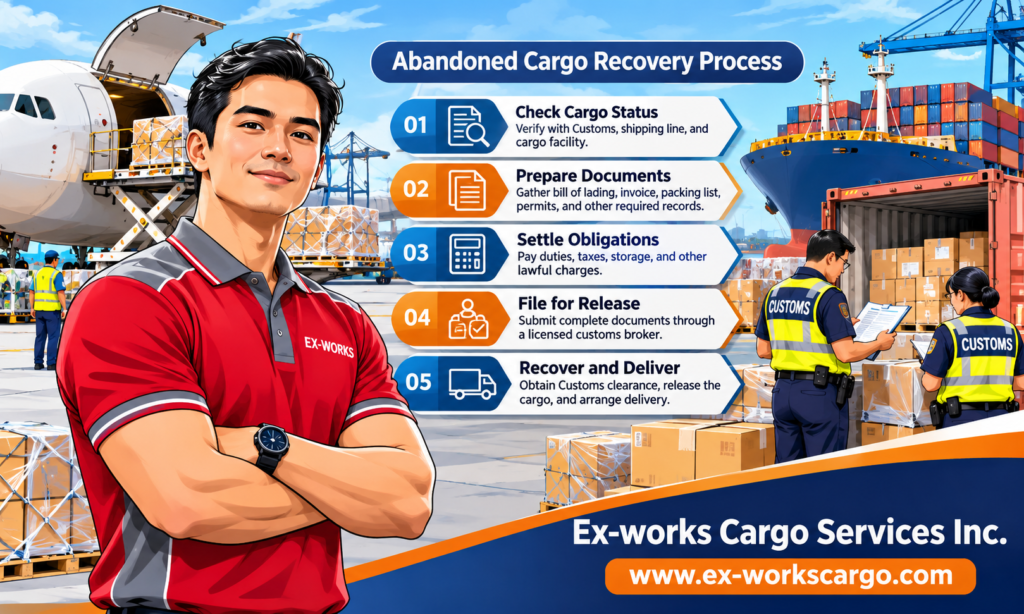
The first step involves contacting the customs office handling the shipment. Importers should request information about the cargo’s status and any pending customs action. They should also coordinate with the shipping line, freight forwarder, and cargo facility. These parties can provide arrival records, shipping documents, and details about outstanding charges.
Next, importers should gather the bill of lading, commercial invoice, packing list, and applicable permits. A licensed customs broker can review these records and identify missing requirements. However, document submission alone does not guarantee the release of abandoned goods. Customs authorities must determine whether the shipment remains eligible for withdrawal or another lawful remedy.
About the Customs Duties, and Taxes
Importers must review the financial obligations attached to their shipments before seeking release. These may include customs duties, value-added tax, storage fees, and other lawful charges. Shipping lines and terminal operators may also impose separate fees under applicable agreements. Therefore, owners should request updated statements before making payments.
For goods that remain legally eligible for release, customs may require payment of outstanding duties and taxes. Importers must also meet applicable permit and clearance requirements. However, payment does not automatically reverse a final abandonment or disposal action. Abandoned cargo recovery depends on the governing rules, shipment status, and decisions of authorized customs officials.
Key Documents for Reclaiming an Abandoned Shipment
A successful customs review starts with complete and accurate import records. Importers should compare the declared goods against the invoice, packing list, and shipping documents. Any mismatch may delay the assessment or lead to further examination. In addition, regulated products may require permits from agencies such as the FDA, BPI, or other authorities.
The importer should verify the shipment’s consignee details and customs registration status. If needed, the customs broker can help identify errors in the declaration. Supporting documents may include delivery orders, proof of payment, and correspondence with customs officials. For abandoned cargo in the Philippines, proper records help establish the facts and support any available remedy.
When Can Importers Still Recover Abandoned Cargo?
The opportunity to recover goods depends on the applicable law and stage of customs action. Under Section 1131 of the CMTA, withdrawal of implied abandonment may be allowed before the goods are disposed of. However, the importer must meet the conditions imposed by law, including payment of required charges.
The rules differ when an owner expressly abandons goods to the government. Therefore, importers should not assume that every abandoned shipment remains available for release. They must also check whether customs has started auction or disposal proceedings. Early action gives owners more time to review lawful options for abandoned cargo recovery.
Common Reasons Imported Cargo Remains Unclaimed
Several problems can prevent importers from completing customs clearance on time. Missing import permits, incorrect cargo descriptions, and unpaid charges can create delays. In some cases, consignees fail to receive timely shipment updates. Others may face disputes involving shipping documents or unexpected logistics expenses.
Importers should monitor cargo arrival notices and maintain regular contact with their service providers. They should also confirm the required documents before shipments reach Philippine ports. Furthermore, businesses should prepare funds for customs duties, taxes, and related charges. These measures can reduce the risk of abandoned cargo in the Philippines.
How Customs Brokers support recovery
Licensed customs brokers help importers review declarations, shipping records, and customs requirements. They can explain applicable procedures and coordinate document preparation with authorized parties. However, only the proper customs authorities can decide whether a shipment qualifies for release. No broker or freight forwarder can guarantee recovery.
Businesses should seek professional assistance before legal deadlines expire. A qualified service provider can help assess the shipment’s status and identify practical next steps. Importers should request written cost estimates and confirm the scope of services. Clear communication helps manage expectations during abandoned cargo recovery.
Preventing Future Cargo Abandonment
Prevention begins before the supplier ships the goods. Importers should confirm product classifications, required permits, shipping terms, and expected customs charges. They should also assign a responsible person to monitor each shipment. This approach helps businesses identify problems before clearance deadlines become critical.
Reliable freight coordination can also improve document flow between suppliers, carriers, and importers. Additionally, accurate arrival updates help businesses plan payments and customs filings. Importers should maintain organized records and seek advice when unusual clearance issues arise. These practices can reduce the risk of abandoned cargo in the Philippines.
Final Thoughts on Recovering Cargo
Recovering goods requires timely action, complete records, and a clear understanding of customs procedures. Importers should confirm the shipment’s legal status before paying recovery-related charges. They must also determine whether customs rules still permit withdrawal or release. Each case requires careful review of the relevant facts.
Businesses facing delays should contact the concerned customs office and seek guidance from a licensed customs broker. Early coordination can help prevent avoidable expenses and missed deadlines. Above all, importers should follow official procedures rather than rely on promises of guaranteed release. Lawful action remains essential for abandoned cargo recovery.
Frequently
Asked Questions
Recovery depends on the legal grounds for abandonment and the stage of customs proceedings. Section 1131 allows withdrawal of implied abandonment under specified conditions before disposal. However, express abandonment follows different rules, and customs must assess each request under applicable law.
Philippine customs law provides specific deadlines for lodging declarations and meeting other obligations. The applicable period depends on the relevant rule and circumstances. Confirm arrival dates, notices, and any extensions with customs instead of relying on a single general deadline.
Charges may include assessed customs duties, taxes, storage, demurrage, and other lawful fees. Amounts vary with cargo value, classification, time in storage, and service providers. Request written assessments and updated statements before paying any party involved in the recovery process.
Not necessarily. Customs must first confirm that release remains lawful under the shipment's status and applicable procedures. Payment alone cannot reverse every abandonment action. Ask the concerned office whether withdrawal remains available before settling charges solely for the purpose of recovery.
A licensed customs broker can review records, explain customs requirements, prepare filings, and coordinate with authorized parties. However, brokers cannot guarantee release or override customs decisions. Importers should request clear service terms, cost estimates, and updates throughout the recovery process.