Preventing Customs Auction – Save Your Imported Cargo
Preventing Customs Auction – Save Your Imported Cargo
Preventing Customs Auction – Save Your Imported Cargo
SHARE THIS ARTICLE
RECENT ARTICLES
Unleash the potential of your business with Ex-works
Ex-works has assisted companies globally in imports and exports. Allow us to handle all your shipments so you do not face any challenges during the customs clearance process in the Philippines. We also offer customs clearance services at a small cost if you need to deliver urgently and save time. Open an account today with Ex-works, and let us assist your business in overcoming the obstacles of international customs.
SHIP IN MORE THAN 180 COUNTRIES
-
Wholesale Rate
-
Global Network
-
Online Tracking
-
Simplified Shipping
GROW YOUR BUSINESS FROM ANYWHERE.
SUBSCRIBE TO EX-WORKS24/7 NEWS LETTER
Home » Preventing Customs Auction – Save Your Imported Cargo
Preventing Customs Auction: Save Your Imported Cargo
Customs auction can put imported goods at risk when owners miss filing dates, payment deadlines, or official notices. Importers must track shipments, review customs records, and act before legal remedies expire. Early action may protect valuable cargo from auction.
In the Philippines, the Bureau of Customs (BOC) follows legal rules before selling abandoned or forfeited goods. However, importers may still have options, depending on their shipment’s status, the applicable deadlines, and the grounds for recovery.
Table of Contents
How to Prevent Customs Auction in the Philippines
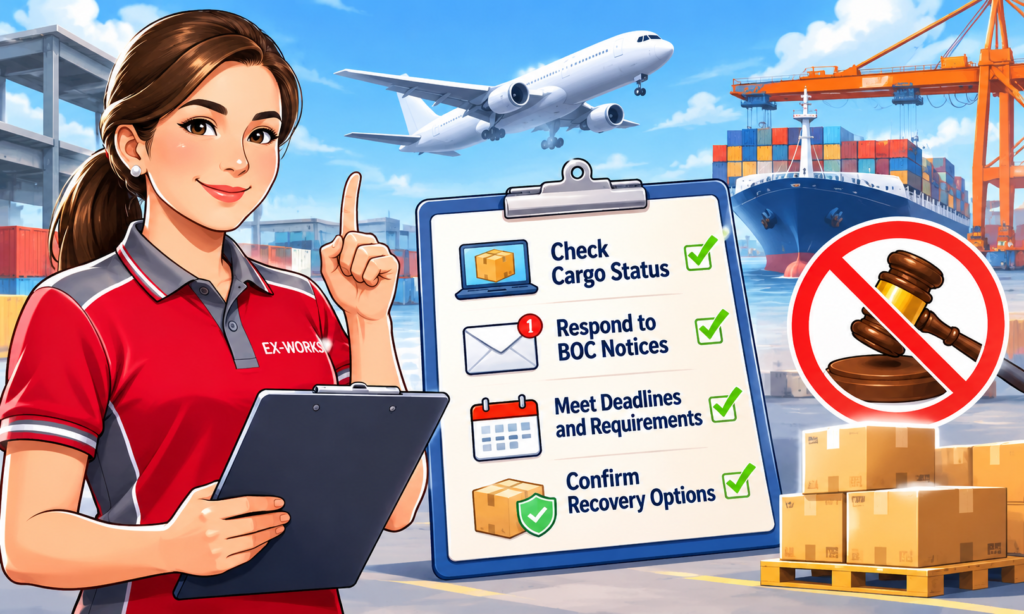
1. Check Cargo Status Before Customs Auction
Preventing customs auction starts with knowing where the shipment stands in the clearance process. Importers should request updates from their customs broker, freight forwarder, shipping line, or airline. These updates help identify delays, unpaid charges, missing permits, and pending customs action.
First, obtain the bill of lading or air waybill, arrival notice, and cargo reference number. Next, ask the customs broker to check the goods declaration and related customs records. Importers should also confirm whether BOC has issued an assessment, hold order, abandonment notice, or other official action.
A shipping line’s tracking system may confirm arrival but cannot establish the shipment’s full legal status. Therefore, importers should verify the customs record directly through their authorized representatives or the concerned BOC office.
2. Respond to BOC Notices Before Cargo Auction
A customs auction may follow legal action involving abandoned or forfeited goods. Importers should examine every BOC notice and record its issue date, receipt date, and required response.
Under Republic Act No. 10863, the Customs Modernization and Tariff Act (CMTA), Section 1129 governs abandonment. It distinguishes express abandonment from implied abandonment.
Express abandonment occurs when the owner, importer, or consignee expressly relinquishes goods through the required written declaration. Implied abandonment arises when specified acts or failures occur under the law.
For example, failure to lodge a goods declaration within the prescribed period may trigger implied abandonment. Other grounds involve failures to pay assessed duties and taxes or claim goods within applicable periods.
However, the relevant legal trigger determines the deadline. Importers should not assume every customs notice allows the same response period.
3. Determine Whether Customs Auction Can Be Prevented
Importers may still recover certain goods before auction, provided the shipment meets the applicable legal requirements. Section 1130 of the CMTA addresses the treatment and recovery of abandoned goods.
For implied abandonment, the law permits recovery under stated conditions before disposal. Importers must meet the applicable requirements, including payment of duties, taxes, and lawful charges where required.
Express abandonment differs because the importer has voluntarily relinquished the goods. Therefore, importers should not assume the same recovery remedy applies to both categories.
A customs broker can help review the declaration, shipment records, and available administrative options. Still, only the competent customs authorities can determine whether the goods qualify for release.
Importers should request written confirmation of the shipment’s status before committing to recovery costs.
4. Know the Legal Deadlines for Customs Auction
Customs auction risks increase when importers overlook the periods set by the CMTA. Section 407 generally requires goods declarations within fifteen days from the discharge of the last package.
The District Collector may grant an additional fifteen days for valid reasons, subject to legal conditions. Meanwhile, Section 1129 identifies other grounds for implied abandonment.
Importers generally face a fifteen-day payment period following final assessment, as specified under Section 1129(c). Goods that remain unclaimed thirty days after payment may also become impliedly abandoned.
Section 1130 provides a thirty-day recovery period following the lapse of the prescribed declaration period, subject to its conditions. However, this provision does not create a universal thirty-day extension for every abandonment case.
Accordingly, importers must identify the precise legal ground before calculating their deadlines.
5. Prepare Documents for Abandoned Cargo Recovery
Recovering goods before customs auction requires accurate shipment records and proof of compliance. Importers should prepare commercial invoices, packing lists, transport documents, and available customs declarations.
They should also secure payment records, import permits, and copies of BOC notices. Where necessary, the customs broker may request records from the concerned customs office.
Missing permits or disputed assessments may require separate action. Therefore, importers should identify each unresolved issue before filing their request.
Terminal storage, handling, and other lawful charges may continue to increase while goods remain in custody. Early review helps importers assess whether recovery remains practical.
Importers should never rely solely on verbal assurances that a shipment can be released. Written records help protect their interests.
6. What Happens After the Customs Auction?
Once customs auction takes place, physical recovery becomes more difficult and may no longer be available through ordinary abandonment remedies.
However, Section 1130 provides for the treatment of proceeds from certain impliedly abandoned goods sold without a discovered offense. The law allows eligible persons to receive the remaining proceeds after lawful deductions.
These deductions include duties, taxes, and applicable charges and expenses. This process differs from reclaiming the actual shipment.
BOC must follow the applicable rules when disposing of goods under customs custody. CAO No. 03-2020 provides detailed procedures for seized, abandoned, and forfeited goods.
Importers should determine whether the goods remain in custody, await disposal, or have already been sold. This information guides the next legal step.
7. Build a Plan to Avoid Future Customs Auction
Preventing customs auction requires consistent shipment monitoring and early customs compliance. Importers should establish clear responsibilities for their logistics teams and accredited customs brokers.
Before shipping, confirm the product classification, import permits, and required supporting documents. After arrival, monitor declaration filing, assessment, payment, and cargo release.
Importers should also maintain current contact details for receiving official customs notices. Regular updates reduce the risk of missing important deadlines.
A reliable tracking process helps businesses identify clearance problems before they become costly. However, tracking alone cannot replace compliance with customs laws.
Ultimately, informed decisions, complete records, and timely action provide the strongest protection against preventable cargo abandonment.
Frequently
Asked Questions
Customs auction may occur when imported goods become abandoned or forfeited under Philippine customs laws. Common causes include missed filing deadlines, unpaid duties, and unclaimed shipments. However, the Bureau of Customs must follow applicable legal procedures before disposing of goods.
Importers may recover certain impliedly abandoned goods before disposal when they meet the conditions under Section 1130 of the CMTA. Recovery depends on applicable deadlines, compliance requirements, and payment obligations. Customs authorities must confirm whether the shipment qualifies for release.
Section 407 generally allows fifteen days after discharge of the last package to lodge a goods declaration. The District Collector may grant another fifteen days for valid reasons. Importers should request extensions within the applicable period and confirm official approval.
Expressly abandoned goods become government property under Section 1130 of the CMTA. The ordinary recovery provision for implied abandonment does not apply. Importers should seek legal advice before submitting an abandonment declaration because this decision carries significant consequences for ownership rights.
Importers should first contact their licensed customs broker and the concerned Bureau of Customs office. They should request the shipment status, applicable notices, and available remedies. Qualified legal counsel may assist when abandonment decisions, deadlines, or ownership rights become disputed.