Implied abandonment vs. Express Abandonment
Implied abandonment vs. Express Abandonment
Implied abandonment vs. Express Abandonment

SHARE THIS ARTICLE
RECENT ARTICLES
Unleash the potential of your business with Ex-works
Ex-works has assisted companies globally in imports and exports. Allow us to handle all your shipments so you do not face any challenges during the customs clearance process in the Philippines. We also offer customs clearance services at a small cost if you need to deliver urgently and save time. Open an account today with Ex-works, and let us assist your business in overcoming the obstacles of international customs.
SHIP IN MORE THAN 180 COUNTRIES
-
Wholesale Rate
-
Global Network
-
Online Tracking
-
Simplified Shipping
GROW YOUR BUSINESS FROM ANYWHERE.
SUBSCRIBE TO EX-WORKS24/7 NEWS LETTER
Home » Implied abandonment vs. Express Abandonment
Implied Abandonment vs. Express Abandonment - Recovery Guide
Implied abandonment and express abandonment can affect an importer’s right to recover cargo from the Philippine Bureau of Customs. Both involve goods that customs authorities may treat as abandoned under the Customs Modernization and Tariff Act. However, each has different legal grounds and procedural requirements. Importers must understand these rules before seeking cargo release. Knowing the difference between implied abandonment and express abandonment helps businesses protect their shipments and avoid costly delays.
A customs abandonment order can place imported goods at risk of government disposal. However, the law provides remedies under specific conditions. Importers must review the abandonment grounds, applicable notices, payment requirements, and deadlines before taking action. Early action can help protect their rights and determine whether recovery remains legally possible.
Table of Contents
Implied Abandonment and Express Abandonment Under the Law
Express Abandonment: When Importers Give Up
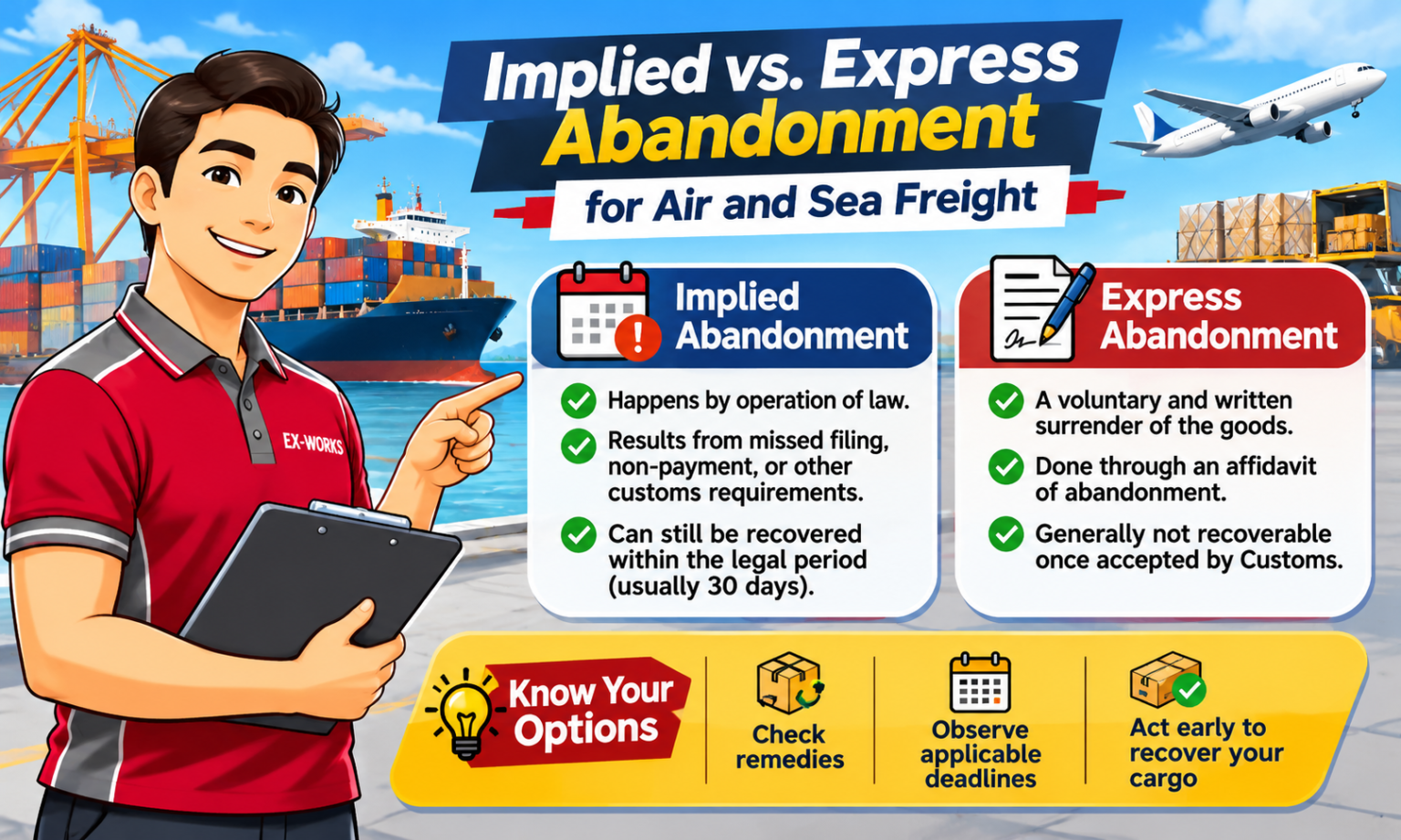
Express abandonment occurs when an importer voluntarily gives up ownership of imported goods through a written declaration. Section 1129(a) of the CMTA recognizes this action. Under CAO 17-2019, the importer submits an Affidavit of Abandonment to the District Collector. Customs then verifies the document and issues the required decree. However, the goods become government property upon filing the affidavit. Therefore, importers should assess the legal and financial effects before signing. Unlike implied abandonment, express abandonment does not provide the same statutory cargo recovery window. Businesses should review shipping records, ownership rights, and outstanding charges before making this choice.
Become Implied Abandonment
Implied abandonment arises when importers fail to meet specific customs duties after receiving the required notice. Common grounds include late goods declarations, unpaid assessments, missing permits, and unclaimed cargo. Section 1129 establishes the main legal grounds. Meanwhile, CAO 17-2019 explains the notice process and other compliance requirements. Customs may also declare goods abandoned when importers fail to meet applicable marking rules. However, the Bureau must follow the relevant legal steps before disposing of goods. Importers should check their registered email, shipment records, and official port notices. Early action can prevent an avoidable loss.
Implied Abandonment and Express Abandonment
Recovery rights differ sharply between implied abandonment and express abandonment. Under Section 1130, owners may reclaim qualifying impliedly abandoned goods before customs disposes of them. The law provides a specific thirty-day recovery period after the filing deadline expires. However, importers must meet all legal requirements and pay applicable charges before release. Expressly abandoned goods become government property when the required affidavit reaches the District Collector. Consequently, ordinary recovery under Section 1130 does not apply to those goods. Importers disputing an abandonment decree should promptly seek legal review of the notice, grounds, and available remedies.
Key Customs Abandonment Deadlines
Philippine customs law sets several deadlines that importers must track. Section 407 generally provides fifteen days to lodge a goods declaration. However, the Commissioner may adjust that period under the law. Some Bureau notices apply a seven-day filing period under relevant customs orders. After final assessment, importers generally have fifteen days to pay assessed charges. Meanwhile, goods must normally be claimed within thirty days after payment. Section 1130 provides a separate recovery period for qualifying impliedly abandoned shipments. Importers should verify which deadline governs their shipment.

Available Remedies After an Abandonment Order
Importers should first obtain the Decree of Abandonment and review its legal grounds. Next, they should confirm whether customs served the required notice correctly. A qualified customs broker can review filing records, assessments, permits, and payment details. Where Section 1130 applies, importers may seek reclamation before customs disposes of the shipment. They must also settle lawful duties, taxes, terminal charges, and other expenses. If the decree appears legally defective, importers should seek prompt advice about administrative or judicial review. The correct remedy depends on the case and applicable rules.
When Customs Auctions Abandoned Cargo
Customs may sell or otherwise dispose of abandoned goods under the CMTA. Section 1141 governs the main disposal methods. However, Section 1130 protects certain financial interests in impliedly abandoned goods. When customs sells qualifying goods without discovering an offense, the former owner may receive the remaining proceeds. The Bureau first deducts lawful duties, taxes, and related expenses. CAO 17-2019 also sets rules for holding unclaimed proceeds. Therefore, importers should distinguish between recovering physical cargo and claiming a possible auction balance. Both outcomes depend on the facts and applicable legal requirements.
How Importers Can Reduce Abandonment Risks
Importers can reduce abandonment risks through timely filing, payment, and cargo collection. First, they should monitor vessel arrivals and confirm the actual discharge date. Next, they should prepare shipping documents and obtain required import permits. Regular checks of registered email accounts also help prevent missed customs notices. Businesses should coordinate with their customs brokers, freight forwarders, and terminal operators. Moreover, they should track assessment dates, payment records, and cargo release status. When problems arise, prompt written action can help protect available remedies. Careful records support faster review and reduce the risk of costly disputes.
Final Guidance on Cargo Recovery
Implied abandonment and express abandonment create different legal outcomes for Philippine importers. Express abandonment transfers ownership to the government through a formal written declaration. By contrast, implied abandonment may leave a limited path to reclaim qualifying shipments. Importers must act within applicable deadlines and meet the conditions for release. They should also check whether customs has already sold or disposed of the goods. Finally, professional review can help identify procedural defects and lawful recovery options. Understanding these rules supports better decisions and helps businesses avoid unnecessary cargo losses.
Frequently
Asked Questions
Express abandonment occurs when an importer formally gives up imported goods through a written affidavit. Implied abandonment results from missed customs duties or deadlines after required notice. Their legal effects differ, especially regarding ownership, reclamation rights, and possible recovery procedures.
Expressly abandoned goods become government property upon filing the required affidavit with the District Collector. Section 1130 does not provide the same reclamation right available for implied abandonment. Anyone questioning the affidavit should promptly obtain case specific professional legal advice.
Section 407 generally allows fifteen days from discharge of the last package to lodge a goods declaration. However, customs may apply an adjusted period under valid orders. Importers should check current port notices and seek permitted extensions before deadlines expire.
Under CAO 17-2019, unpaid assessed duties and taxes may trigger implied abandonment fifteen calendar days after final assessment. The assessment process has its own timing rules. Importers should review official notices, dispute records, and payment deadlines carefully without delay.
When customs auctions qualifying impliedly abandoned goods without finding an offense, entitled persons may claim remaining proceeds after lawful deductions. This differs from reclaiming physical cargo. Importers should check auction records, relevant time limits, and the responsible local customs office.