Customs Clearance in The Philippines: The Expert Guide
Customs Clearance in The Philippines: The Expert Guide
Customs Clearance in The Philippines: The Expert Guide
SHARE THIS ARTICLE
RECENT ARTICLES
Unleash the potential of your business with Ex-works
Ex-works has assisted companies globally in imports and exports. Allow us to handle all your shipments so you do not face any challenges during the customs clearance process in the Philippines. We also offer customs clearance services at a small cost if you need to deliver urgently and save time. Open an account today with Ex-works, and let us assist your business in overcoming the obstacles of international customs.
SHIP IN MORE THAN 180 COUNTRIES
-
Wholesale Rate
-
Global Network
-
Online Tracking
-
Simplified Shipping
GROW YOUR BUSINESS FROM ANYWHERE.
SUBSCRIBE TO EX-WORKS24/7 NEWS LETTER
Enter our comprehensive guide to navigating Philippine customs procedures, vital for enhancing international trade efficiency. Understanding Philippine customs intricacies ensures seamless import and export operations for both businesses and individuals. Our blog provides an extensive overview, addressing import documentation prerequisites, customs duties, and tax considerations.
Efficiently navigates customs clearance procedures with insights into the Bureau of Customs in the Philippines. Learn about regulations, documentation requirements, and streamlined processes to ensure smooth import and export transactions.
The Philippine Customs Bureau
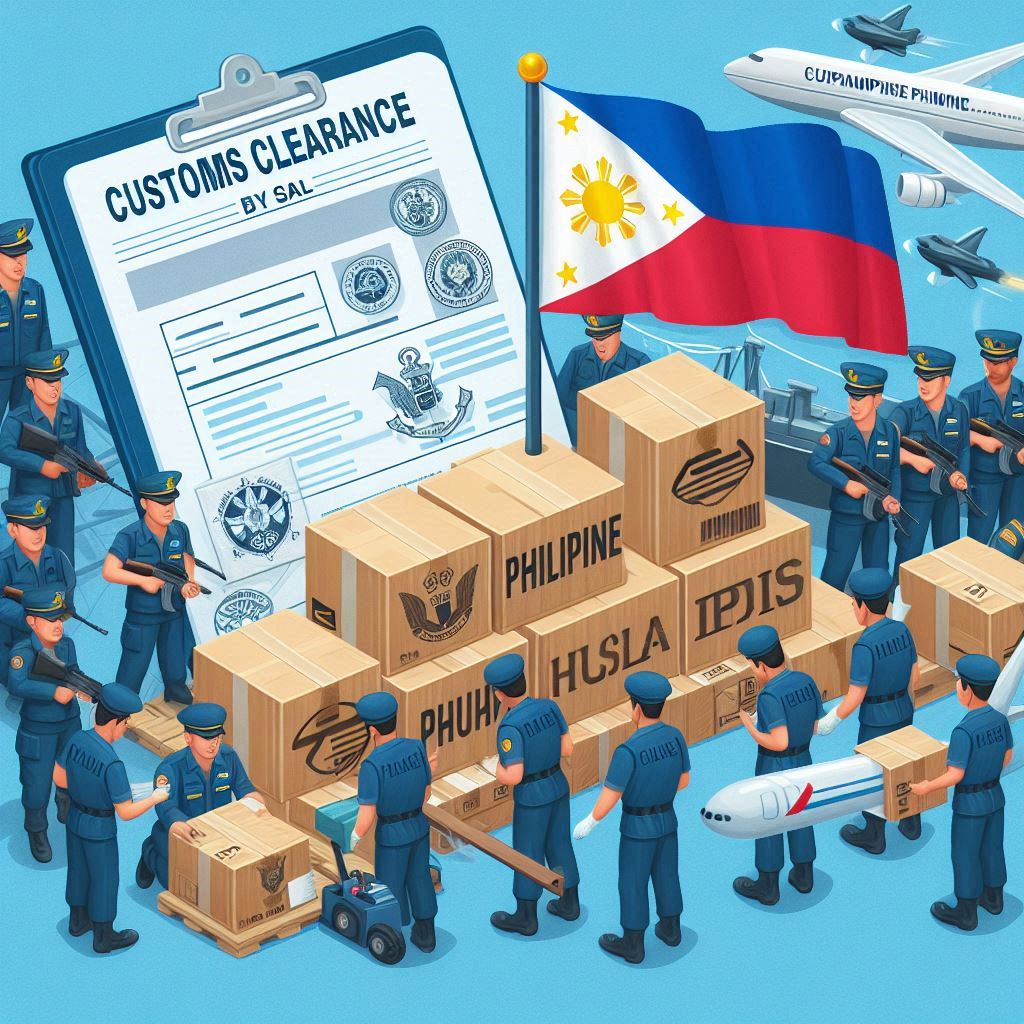
The Bureau of Customs (BOC) in the Philippines is responsible for regulating and facilitating the flow of goods in and out of the country. The customs clearance services and procedures in the Philippines are governed by various laws and regulations, including the Customs Modernization and Tariff Act (CMTA) and its implementing rules and regulations.
Import Procedures: When importing goods into the Philippines, several steps must be followed to ensure compliance with customs regulations. These steps typically include:
The functions of Philippine Customs
Per the Customs Modernization and Tariff Act (CMTA) of the Philippines, the Bureau of Customs (BOC) modernizes customs clearance procedures. BOC facilitates cross-border goods movement, enforces customs laws, collects tariffs and taxes, combats smuggling, targets high-risk shipments, ensures trade agreement compliance, employs technology, trains personnel, simplifies procedures, and collaborates for border security. These functions highlight BOC’s crucial role in Philippine trade regulation, revenue collection, and transparent customs processes.
Import Customs Clearance
When importing goods into the Philippines, following customs clearance regulations diligently is essential. This typically involves:
Document Preparation: Importers must compile necessary paperwork, such as the commercial invoice, packing list, bill of lading, and other supporting documents.
Import Declaration Submission: Importers must electronically submit an Import Declaration (ID) via the BOC’s customs system, detailing goods’ information.
Customs Inspection: Customs authorities may inspect imported goods physically to ensure compliance, particularly for high-risk shipments.
Duties and Taxes Payment: Importers must settle customs duties, taxes, and fees before goods are released, varying based on factors like type and value.
Subscribe to the Ex-works24/7 newsletter
Export Customs Clearance
Exporters in the Philippines must follow customs clearance protocols when shipping goods abroad. This typically involves:
Document Preparation: Exporters compile export paperwork, including invoices, packing lists, declarations, and necessary permits or licenses.
Export Declaration Submission: Exporters electronically submit Export Declarations (ED) via the BOC’s system, detailing goods and destination.
Customs Clearance: Authorities may inspect exports for compliance and accuracy with regulations.
Certificate of Origin: Exporters might need a Certificate of Origin (CO) for preferential tariff treatment, depending on the destination.
Conclusion: Navigating Philippine Customs involves complexity, but compliance and technology facilitate smooth import/export processes, ensuring legality.
Frequently
Asked Questions
Customs clearance in the Philippines refers to the process of obtaining permission from the Bureau of Customs (BOC) to bring goods into or out of the country. This process ensures that all duties, taxes, and regulations are met, and the goods comply with local laws before being released for importation or exportation. It includes submitting required documentation, paying applicable fees and taxes, and passing inspections if needed.
To clear goods through customs in the Philippines, the following documents are typically required:
- Bill of Lading (BOL) or Air Waybill (AWB) – Proof of shipment.
- Commercial Invoice – A detailed description of the goods being imported.
- Packing List – Breakdown of the contents of the shipment.
- Import Permit/License – If applicable (for regulated items like pharmaceuticals, food, or chemicals).
- Certificate of Origin – If required, to determine duty rates based on trade agreements.
- Customs Declaration Form (Bureau of Customs form 1700) – To declare the items being imported.
- Proof of Payment – Payment of duties and taxes, typically through the Bureau of Customs online payment system.
For specific goods, additional documents might be required, such as certificates for sanitary or phytosanitary requirements.
Customs duties and taxes in the Philippines are calculated based on the Customs Valuation system, which considers the CIF value (Cost, Insurance, and Freight) of the imported goods. The general breakdown is:
- Customs Duties – Typically based on the Harmonized System (HS) Code of the product. The duty rate depends on the product's classification, ranging from 0% to 20% or more.
- Value Added Tax (VAT) – Generally 12% of the total value of the goods, including customs duties.
- Excise Taxes – Applied on specific goods, like alcohol, tobacco, and petroleum products.
Additional fees, such as handling charges, inspection fees, and other government-imposed levies, may also apply.
The duration of customs clearance depends on various factors, such as the type of goods, completeness of documentation, and the level of inspection required. On average:
- Standard Customs Processing: 1-3 days for regular shipments without complications.
- Inspection and Examination: Shipments that are flagged for inspection may take longer, anywhere from 3 to 7 days or more.
- Clearance of Special Cargo: If additional permits or regulatory checks are required (e.g., for food, chemicals, or pharmaceuticals), this could add several days or weeks.
A good practice is to ensure that all documentation is correct and complete to avoid delays.
Yes, customs clearance in the Philippines can (and often is) handled by a licensed customs broker. A customs broker is an expert in navigating the regulations and paperwork involved in customs clearance. They are responsible for:
- Preparing and submitting all required documentation.
- Calculating and paying the necessary duties and taxes.
- Ensuring compliance with regulations set by the Bureau of Customs and other government agencies.
- Handling any inspections, examinations, or issues that may arise during the process.
Hiring a licensed customs broker is particularly helpful for businesses or individuals who are importing or exporting frequently, as they ensure compliance and minimize the risk of delays or fines.