What Are the Import Permit Requirements in the Philippines?
What Are the Import Permit Requirements in the Philippines?
What Are the Import Permit Requirements in the Philippines?
SHARE THIS ARTICLE
RECENT ARTICLES
Unleash the potential of your business with Ex-works
Ex-works has assisted companies globally in imports and exports. Allow us to handle all your shipments so you do not face any challenges during the customs clearance process in the Philippines. We also offer customs clearance services at a small cost if you need to deliver urgently and save time. Open an account today with Ex-works, and let us assist your business in overcoming the obstacles of international customs.
SHIP IN MORE THAN 180 COUNTRIES
-
Wholesale Rate
-
Global Network
-
Online Tracking
-
Simplified Shipping
GROW YOUR BUSINESS FROM ANYWHERE.
SUBSCRIBE TO EX-WORKS24/7 NEWS LETTER
Import permit requirements include the proper documents, customs declarations, and, when applicable, permits. The requirements depend on the product, its intended use, and relevant government rules. Therefore, importers should check the rules before shipping goods.
Understanding import permit requirements helps businesses avoid preventable delays, extra costs, and compliance issues. Moreover, early preparation supports smoother customs clearance and better shipment planning.
Table of Contents
Understanding Import Permits and Philippine Customs Rules
Import permits are official approvals issued by the relevant government agencies for certain goods entering the Philippines. However, not every shipment requires a separate import permit. The Bureau of Customs (BOC) classifies goods as freely importable, regulated, restricted, or prohibited. Therefore, importers must identify their products correctly before arranging international shipping. The Philippine National Trade Repository (PNTR) helps users check commodity-specific requirements. Additionally, the BOC provides importation guidelines covering registration, documents, customs declarations, duties, taxes, and release procedures. Importers should review the import permit requirements requirements before shipping to prevent avoidable problems.
Import Permit Requirements: Product Classification
The first step is to identify the product’s correct tariff classification and regulatory status. Importers should describe the goods accurately, including their composition, intended use, model, and country of origin. Next, they should consult the Philippine National Trade Repository to identify relevant permits, licenses, and government agencies. For example, food, medicines, cosmetics, plants, and animal products may require regulatory approval. Likewise, certain telecommunications equipment and industrial chemicals may have additional requirements. The responsible agency depends on the specific product and applicable rules. Consequently, importers should secure import permit requirements approvals before shipment.
Import Permit Requirements: Documents and Registration
Importers generally need supporting documents for customs clearance, even when their goods do not require special permits. These commonly include a commercial invoice, packing list, bill of lading or air waybill, and goods declaration. Moreover, customs may require proof of payment, a certificate of origin, insurance records, or other supporting documents. The BOC also requires appropriate importer accreditation before eligible importers transact through its systems. Regular importers and non-regular importers follow different accreditation arrangements. Therefore, businesses should check their registration category and prepare current documentary requirements through the BOC Client Portal. Import permit requirements may vary with the shipment and applicable regulations.
Import Permit Requirements: Agencies and Regulated Goods
Different government agencies regulate different product categories. For example, the Food and Drug Administration oversees covered health products, cosmetics, and food products under applicable rules. Meanwhile, the Bureau of Plant Industry and Bureau of Animal Industry regulate relevant plant and animal products. The National Telecommunications Commission may regulate particular telecommunications equipment. Additionally, the Bureau of Philippine Standards handles applicable product standards and certification requirements. Importers should confirm the exact agency, permit type, validity period, and application procedure for each product. Some commodities also require inspections, certificates, or special clearances. Importing restricted goods without legal authorization may lead to enforcement action. Therefore, verify the current rules directly with the responsible agency for your import permit requirements.
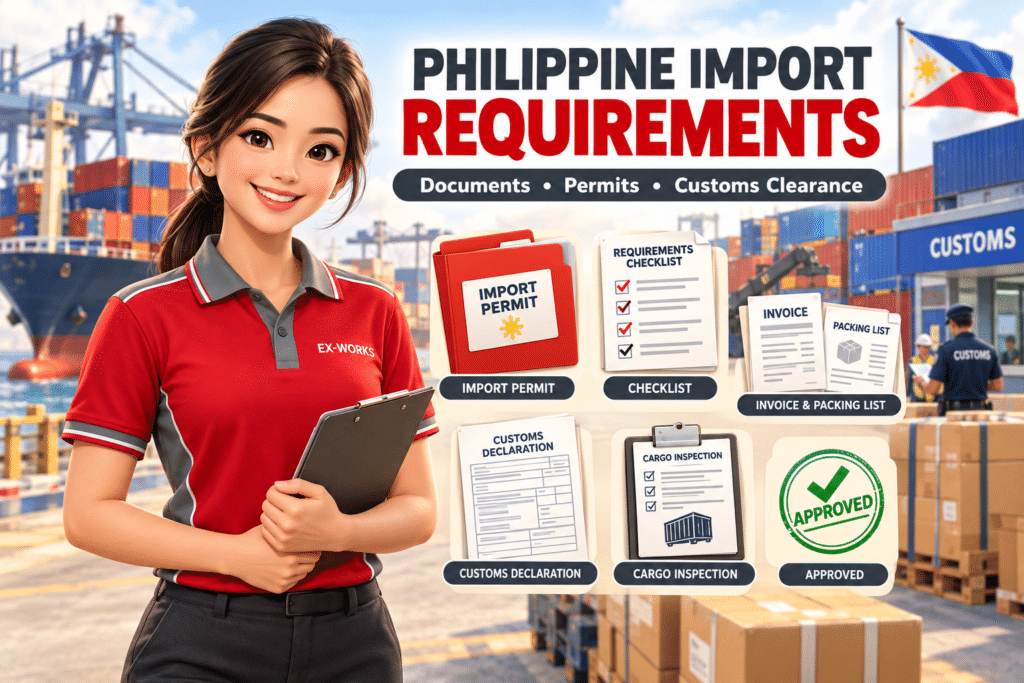
Importers should also distinguish permits from ordinary customs documents. A commercial invoice records transaction details, while a permit authorizes an activity involving regulated goods. Similarly, a certificate of origin supports claims about where products originate and may affect preferential tariff treatment. However, these documents serve different purposes and are not interchangeable. Businesses should ensure product descriptions, quantities, values, and shipment details match across their records. Furthermore, they should check whether import permit requirements remain valid on the shipment date and during customs processing. If requirements are unclear, importers can consult the BOC, the responsible regulator, or a licensed customs broker. Early verification helps reduce documentation errors and unnecessary storage costs.
Before goods arrive, importers should coordinate with suppliers, freight forwarders, and customs brokers to confirm document readiness. They should obtain required import permit requirements, review shipping documents, and check whether labels or product standards apply. Next, the importer or authorized customs broker submits the goods declaration and supporting records under the applicable procedures. Customs may review documents, inspect goods, assess duties and taxes, and verify regulatory compliance. Consequently, missing permits or inconsistent records can delay release. Importers should also budget for duties, taxes, terminal charges, storage, and other applicable costs. The exact amount and processing time depend on the goods, port, and circumstances.
Importers can reduce risk by following a simple compliance checklist before placing an order. First, identify the correct product classification and confirm whether importation is allowed. Second, ask the relevant agency about permits, licenses, standards, and required certificates. Third, check importer accreditation and prepare complete shipping documents. Fourth, verify that every document matches the actual shipment. Finally, keep copies of permits, declarations, invoices, payment records, and regulatory correspondence. Import rules may change, so businesses should verify current requirements before each shipment. For authoritative guidance, consult the Bureau of Customs, Department of Trade and Industry, and the appropriate product regulator. Careful preparation supports lawful, efficient importation. With the right import permit requirements, you are free from penalties and headaches.
Related Links
Frequently
Asked Questions
No. Many goods can enter the Philippines without a separate import permit. However, regulated products may need licenses, clearances, or certificates. Importers should check commodity-specific rules and customs documentation requirements before shipping their goods into the country.
The responsible agency depends on the product. For example, the FDA regulates covered health products, while agricultural agencies oversee certain plants and animals. Importers should identify the correct regulator and confirm its current application procedures before importing goods.
Search the Philippine National Trade Repository using your product details and tariff classification. Additionally, contact the relevant regulatory agency to confirm current requirements. Check whether permits, certificates, licenses, or inspections apply before arranging shipment to the Philippines.
Common documents include a commercial invoice, packing list, bill of lading or air waybill, and goods declaration. Depending on the shipment, customs may also require permits, certificates of origin, proof of payment, or other supporting records.
Shipment size alone does not automatically remove regulatory requirements. Certain personal imports may qualify for specific exceptions, subject to applicable conditions. Therefore, check the product category, quantity limits, intended use, and current agency rules before importing personal or commercial goods.